how do you define the will to power? give an example of it? what do you think of it and why?
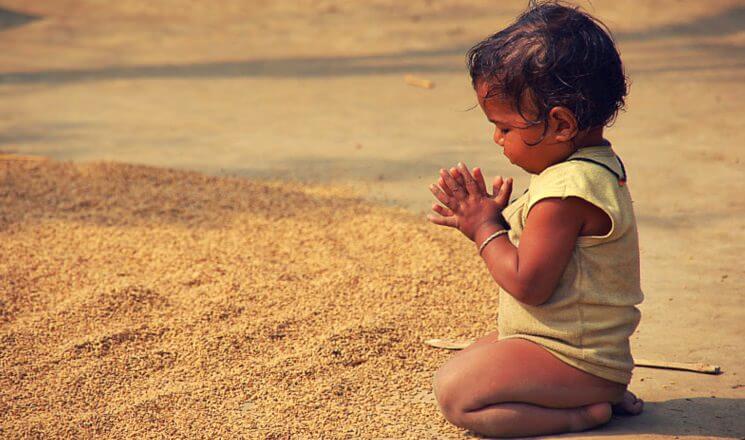
There is a multifariousness of things that can conjure positive feelings of appreciation or gratitudethat may guide people towards significant and ameliorate wellness.
"Cultivate the habit of being grateful for every expert thing that comes to yous, and to give thanks continuously. And considering all things have contributed to your advancement, you should include all things in your gratitude."
Ralph Waldo Emerson
Emerson offers a helpful introduction into what practicing gratitude can look similar, and this article volition brainstorm there and explore the current psychological research behind this value.
Gratitude is an emotion similar to appreciation, and positive psychology enquiry has constitute neurological reasons why then many people tin benefit from this general do of expressing cheers for our lives, even in times of claiming and modify.
To brainstorm though, nosotros need to ascertain what we mean by "gratitude."
Before you continue, we thought you might like to download our three Gratitude Exercises for free. These detailed, science-based exercises will help you or your clients connect to more positive emotions and enjoy the benefits of gratitude.
What is Gratitude?
Many of us express gratitude by proverb "thank you" to someone who has helped united states or given the states a gift. From a scientific perspective, however, gratitude is not just an action: it is as well a positive emotion that serves a biological purpose.
Positive psychology defines gratitude in a mode where scientists tin can measure its effects, and thus argue that gratitude is more than than feeling thankful: it is a deeper appreciation for someone (or something) that produces longer lasting positivity.
Earlier continuing with that definition, we offer ten definitions to provide a cultural context for how the word has changed over time.
10 Definitions
 Co-ordinate to the Merriam-Webster Dictionary, gratitude is simply "the state of being grateful."
The Harvard Medical School provides more detail, writing that gratitude is:
"a thankful appreciation for what an individual receives, whether tangible or intangible. With gratitude, people acknowledge the goodness in their lives … Every bit a result, gratitude also helps people connect to something larger than themselves as individuals–whether to other people, nature, or a higher power"
This provides a more helpful context, leading united states into the side by side definition from psychiatry researchers, who define gratitude as:
"the appreciation of what is valuable and meaningful to oneself and represents a full general state of thankfulness and/or appreciation"
(Sansone & Sansone, 2010).
Researchers besides offer this definition:
"an emotion that is typically evoked when ane receives costly, unexpected, and intentionally rendered benefits, and is idea to play a key role in regulating the initiation and maintenance of social relationships"
(Forster et al., 2017).
Another simple definition of gratitude that comes from psychology research is:
"a social emotion that signals our recognition of the things others accept done for us"
(Fox et al., 2015).
This definition is of import considering it brings a social chemical element into the definition of gratitude.
The social aspect of gratitude from this theologian says:
"if we acquire a good through commutation, endeavour or achievement, or by right, then we don't typically feel gratitude. Gratitude is an emotion we experience in response to receiving something good which is undeserved"
(Lacewing, 2016).
Another definition emphasizing its social attribute comes from social psychology researchers, who merits that:
"gratitude is a positively valenced emotion that can arise when another person–a benefactor–does something kind for the self
(Algoe et al., 2016).
1 morality-based psychologist writes that:
"gratitude is non appurtenances delivered in response to payment. It is a response to a souvenir … Gratitude, every bit a response to a gift, is also a course of generosity, of graciously crediting the other for something that was not strictly owed"
(Roberts, 1991).
To empathise farther, Robert Emmons offers his psychological research definition on the topic that gratitude:
"has been conceptualized as an emotion, a virtue, a moral sentiment, a motive, a coping response, a skill, and an attitude. It is all of these and more. Minimally, gratitude is an emotional response to a gift. It is the appreciation felt after ane has been the beneficiary of an altruistic act"
(Emmons & Crumpler, 2000).
Emmons explains gratitude deeper in another paper. He (and his coauthor Robin Stern) say that:
"gratitude has a dual meaning: a worldly one and a transcendent one. In its worldly sense, gratitude is a feeling that occurs in interpersonal exchanges when one person acknowledges receiving a valuable do good from another. Gratitude is a cognitive-affective land that is typically associated with the perception that one has received a personal benefit that was non intentionally sought after, deserved, or earned merely rather considering of the adept intentions of another person"
(Emmons & Stern, 2013).
We hope these definitions of gratitude provide a psychological, social, and religious context for this positive emotion. Whether you hold with all the definitions or identify with i, nosotros are at present equipped to delve into its greater role in our health and daily lives.
In summary, gratitude is a positive emotion felt after being the beneficiary of some sort of gift. Information technology is besides a social emotion often directed towards a person (the giver of a gift) or felt towards a higher power.
If yous want to try out a powerful class to practice it, check out our post on gratitude meditation.
Primal Synonyms
There are many synonyms of gratitude, including:
- acknowledgment;
- appreciativeness;
- grace;
- gracefulness;
- gratefulness;
- praise;
- recognition;
- requital;
- responsiveness;
- thankfulness.
Acquittance, appreciativeness, and thankfulness are near relatable for the purpose of this commodity.
Antonyms of Gratitude
The obvious antonym of gratitude is ingratitude, just other antonyms include:
- censure;
- condemnation;
- thanklessness;
- ungratefulness.
Many people are not beholden despite being the casher of an altruistic human activity. Tin you think of a time when you felt this? Almost people can. It is not a pleasant experience for anyone.
Thanklessness deprives people of the emotional rewards of gratitude, and this article hopes to offer tangible means on how to cultivate a more appreciative state of existence.
2 Stages of Gratitude
According to Dr. Robert Emmons, the feeling of gratitude involves two stages (2003):
- Beginning comes the acquittance of goodness in i'south life. In a state of gratitude, we say yeah to life. We affirm that all in all, life is proficient, and has elements that brand worth living, and rich in texture. The acknowledgment that we have received something gratifies united states, both past its presence and past the effort the giver put into choosing it.
- Second, gratitude is recognizing that some of the sources of this goodness prevarication outside the self. I can be grateful to other people, to animals, and to the globe, only not to oneself. At this stage, we recognize the goodness in our lives and who to thank for it, ie., who made sacrifices and then that we could be happy?
The two stages of gratitude comprise the recognition of the goodness in our lives, and and so how this goodness came to usa externally lies. By this procedure, we recognize the luck of everything that makes our lives—and ourselves—better.
Purpose of This Emotion
 People can utilise gratitude to form new social relations or to strengthen current ones.
Acts of gratitude tin can exist used to apologize, make amends and assist solve other problems.
Alternatively, people may feel gracious because it can exist an intrinsically rewarding process. But existence grateful for being alive is a great way to motivate oneself to seize the day.
The idea that tomorrow is not guaranteed is a strong motivator for some people to be their "all-time self" today.
Why Gratitude Works
Gratitude is a selfless human activity. Its acts are done unconditionally, to testify to people that they are appreciated. "A gift that is freely given" is ane mode to understand what these acts are like.
For example, if someone is sad and you write them a notation of appreciation, y'all are likely not asking for something in return for this person; instead, yous are reminding them of their value, and expressing gratitude for their existence. At the moment, you are not waiting for a "render annotation" from this person.
Even when we do not wait a return, sometimes they happen. Gratitude can be contagious, in a good way. In the previous case, peradventure when you lot are down, this person will write you a note too.
Hither are two processes gratitude tin influence.
1. Catharsis
 Catharsis is the process in which an individual releases potent emotions.
For example, after a stressful or traumatic outcome, crying provides a ways for such a potent release, rendering the action cathartic. Catharsis works with gratitude.
To illustrate this, consider the guilt associated with "failing" to meet obligations. Perhaps in this situation, you would limited gratitude to who you let down, in an endeavour to release that guilt. The acts are meant to convey the appreciation that the friends possess, despite a recent disappointment.
Additionally, possessions from passed loved ones may provide a sense of serenity that enables the new owner to reverberate with gratitude on that object and in essence, that person.
The apply of gratitude serves every bit an agent of catharsis, where both parties feel satisfied in the end.
two. Reciprocity
Reciprocity, every bit a concept from social psychology, is about the exchanging of actions.
In this instance, it is about the exchange of positive emotion. When someone performs an human activity of gratitude for some other person, in turn, that person may exist motivated to do something gracious for the former person or continue the favor for a stranger.
Imagine having coffee or a repast with a friend, and they politely demand to pay for the outing. You may quibble back and forth about splitting the nib, simply should they insist, you are likely to feel grateful, and an extended duty that the next meal is "your treat."
In essence, this is exactly how reciprocity works.
Trait or State?
Gratitude is regarded as either a trait (dispositional) or state (of beingness).
Every bit a trait, an individual practices gratitude every bit part of their daily life (McCullough, Emmons, & Tsang, 2002) and it would be considered a character strength, to possess gratitude. Equally a trait, gratitude can be developed with practice and awareness (Peterson, & Seligman, 2004).
When a person experiences the rich emotion from someone expressing gratitude for them, it is referred to equally state (Watkins, Van Gelder, & Frias, 2009). Gratitude is both of these: a trait and a state.
The state of being grateful is a pleasant experience studied by philosophers ancient times. This adjacent department provides a richer context for how this emotion functioned historically in the mindset of people and societies.
Philosophical Perspectives on Gratitude
For at least 2,000 years, intellectuals have been considering the important role gratitude plays in daily life.
Aboriginal and not-so-aboriginal philosophers, such as Cicero, Seneca, and Adam Smith, preached the importance of giving thanks (Trick et al., 2015; McCullough et al., 2002). Cicero and Seneca thought of gratitude equally a key virtue foundational to whatsoever successful civilization.
To be clear, information technology is non but ancient and historical philosophers who were interested in gratitude equally a virtue. In the final few years, several papers draw gratitude from a hybrid psychological-philosophical perspective, as well as from an outright philosophical perspective (Jackson, 2016; Kristjansson, 2015; Moran, 2016; Morgan et al., 2017).
Recently, a paper argued that Jean-Paul Sartre's beliefs are actually aligned with the modern positive psychology movement, since Sartre wrote well-nigh north gratitude every bit a character force (Quackenbush et al., 2016).
If gratitude is a foundational human emotion, then it makes sense why humans have been studying it for millennia. Our species benefits from it, in so many means.
Religious and Spiritual Perspectives on Gratitude
Unsurprisingly, religious and spiritual movements take explored gratitude also. Theravāda Buddhism, Christianity, Islam, and Judaism are some of the main religions with writings on this (Berkwitz, 2003; Emmons & Crumpler, 2000).
Historically, many religions referred to gratitude strictly regarding the demand to be thankful for a higher power. More so, Christianity, Islam, and Judaism stressed gratitude as an integral footstep on the path to a practiced life.
For case, in Judaism, followers of Yahweh are encouraged to get-go every solar day by being grateful for waking upwardly again (Emmons & Crumpler, 2000). Some psychologists believe that Christianity, as another example, incorporates a "gratitude to God" that binds many Christians together (Roberts, 1991).
For Islam, the purpose of the 5 daily prayers is non to ask Allah for anything, but instead, to show gratitude towards Allah (Emmons & Crumpler, 2000). These three religions offer a unique role of gratitude, and overall, one of thank you for this existence and who created it.
In the older writings of Theravāda Buddhism, gratitude connects practitioners to their pasts (Berkwitz, 2003). Today, gratitude and the concept of karma is a driving force behind philanthropic Buddhism in Mainland china (Kuah-Pearce, 2014). Like Christianity, Islam, and Judaism, gratitude plays a unique role in Buddhism historically and presently.
Several contempo studies explore the relationship betwixt religious gratitude (such as gratitude to a higher ability) and well-being (Kraus et al., 2015; Krause & Hayward, 2015; Van Cappellen et al., 2016). This is a burgeoning area of research in the field of positive psychology.
Modern Psychological Perspectives on Gratitude
More recently, positive psychology has expanded research on the importance of gratitude, largely led past researcher Robert Emmons.
Emmons has authored several papers on the psychology of gratitude, showing that being more than grateful can pb to increased levels of well-being (Emmons & Crumpler, 2000). Some of Emmons'south piece of work has also dealt specifically with gratitude in a religious setting, highlighting how feeling grateful towards a higher power may lead to increased physical health (Krause et al., 2015).
Here is an overview of nine recent psychological findings related to the study of gratitude:
1. Enhanced Well-existence
Expressing your thanks tin improve your overall sense of well-being. Grateful people are more agreeable, more than open, and less neurotic (McCullough et al., 2002; McCullough, Tsang, & Emmons, 2004; Wood, Maltby, Gillett, Linley, & Joseph, 2008; Forest, Maltby, Stewart, Linley et al., 2008).
Furthermore, gratitude is related inversely to low, and positively to life satisfaction (Forest, Joseph, & Maltby, 2008). This is not to say that "depressed people" should merely be more grateful, as depression is a very complicated disease and struggle for millions of people. Instead, peradventure gratitude practices need to be a part of the therapy and treatment for people who struggle with depression.
2. Deeper Relationships
Gratitude is besides a powerful tool for strengthening interpersonal relationships.
People who express their gratitude for each other tend to be more willing to forgive others and less narcissistic (DeShea, 2003; Farwell & Wohlwend-Lloyd, 1998).
Giving thanks to those who have helped you strengthens your relationships and promotes human relationship germination and maintenance, as well equally relationship connection and satisfaction (Algoe et al., 2008; Algoe, Gable, & Maisel, 2010).
3. Improved Optimism
Dr. Emmons and Dr. McCullough did a study in 2003 exploring the impact of practicing gratitude. Later 10 weeks, their research conveys that people who focused on gratitude showed more than optimism in many areas of their lives, including wellness and practise.
When people are optimistic about their well-being and health, they may exist more likely to human activity in means that support a salubrious lifestyle.
4. Increased Happiness
Toepfer, Cichy, and Peters (2011) conducted a study asking people to write and evangelize a letter to someone for whom they were grateful. Later on the task, their happiness levels and life satisfaction were dramatically impacted—even weeks later.
In the pursuit of happiness and life satisfaction, gratitude offers a long-lasting consequence in a positive-feedback loop of sorts. Thus, the more gratitude we feel and express, the more situations and people nosotros may discover to express gratitude towards.
5. Stronger Self-Control
Self-Control helps with subject field and focus. Long-term well-existence tin can benefit from self-control, for example, resisting nicotine in cigarettes for someone who is trying to quit smoking. Self-control helps us stick to the "better pick" for our long-term health, financial future, and well-being.
A study by DeSteno et al. in 2014 establish that self-control significantly increased when subjects chose gratitude over happiness or feeling neutral. Ane of the written report's authors, Professor Ye Li, said:
"Showing that emotion can foster cocky-command and discovering a style to reduce impatience with a uncomplicated gratitude exercise opens up tremendous possibilities for reducing a wide range of societal ills from impulse buying and insufficient saving to obesity and smoking."
Beingness thankful can provide us the resolve nosotros need to make choices in our lives that serve us, emotionally and physically, in the long-run. As this study highlights, there are so many applications to using gratitude as a path towards healthier humans and communities.
6. Better Physical and Mental Health
Research performed in 2015 showed that patients with heart failure who completed gratitude journals showed reduced inflammation, improved sleep, and better moods; this reduced their symptoms of heart failure afterward simply 8 weeks.
The link between the listen-trunk connection aligns with how gratitude can take a double do good. For example, the feeling of appreciation helps us to have healthier minds, and with that healthier bodies.
7. An Overall a Better Life
Over the concluding ii decades, the testify supporting the benefits of gratitude has increased a lot.
Consider this quote from the Wall Street Journal's article "Cheers, No, Thank you lot."
"…adults who feel grateful have more energy, more optimism, more social connections and more happiness than those who do not, co-ordinate to studies conducted over the by decade. They're also less likely to be depressed, envious, greedy or alcoholics."
Melinda Beck
Bated from increasing well-being, psychology inquiry shows how practicing gratitude, in this case, gratitude towards a higher power, can reduce levels of stress (Krause, 2006). Practicing gratitude can decrease levels of depression and anxiety (Kashdan & Breen, 2007).
eight. Stronger Athleticism
Studies from researcher Lung Hung Chen found that an athlete's level of gratitude for their success can influence their levels of well-beingness (Chen, 2013; Chen & Wu, 2014). More specifically, adolescent athletes who are more grateful in life are also more than satisfied and tend to have higher levels of cocky-esteem.
Gratitude also affects sports fans (Kim & Jeong, 2015; Kim et al., 2010). Fans' levels of gratitude influence their happiness, connection, and identity with a team. In plow, stronger fan support and pride can influence the performance and pride of the team itself for representing a greater team.
Teri McKeever has applied these findings to her squad, and with incredible success. As the women'south pond and diving autobus at the University of California Berkeley, McKeever has incorporated gratitude exercises into her squad practices—and besides won iii NCAA National Championships in her 20-year career there.
She discusses why and how she does this in her 15-minute clip:
For McKeever, gratitude exercises help set her athletes for productive practice, every bit well every bit help foster cohesion within a team. While McKeever is talking about gratitude in the context of a swim team, the lessons she shares can be useful for any sort of leader, whether information technology is a coach, teacher, manager, or parent.
9. Stronger Neurologically-Based Morality
Neuroscience is beginning to explore what gratitude does to the mysterious human brain.
I written report measured the brain's response to feelings of gratitude with functional magnetic resonance imaging (fMRI) (Fox et al., 2015). These researchers elicited feelings of gratitude in their participants and institute that gratitude increased action in areas of the brain that deal with morality, reward, and judgment.
These neural findings are interesting and afford further studies. Is gratitude associated with morality? If and so, this supports why philosophical and religious thinkers accept used gratitude in the formation and maintenance of their societies (1991).
Information technology will be interesting to see what is in store for future psychological investigations into gratitude.
The Effects of Gratitude
 In a study past McCraty and colleagues (1998), 45 adults were taught to "cultivate appreciation and other positive emotions."
The results of this study showed that at that place was a mean 23% reduction in the stress hormone cortisol after the intervention period. During the use of the techniques, eighty% of the participants exhibited an increased coherence in heart charge per unit variability patterns, indicating reduced stress.
In other words, these findings advise that people with an "mental attitude of gratitude" experience lower levels of stress.
Another report past Seligman, Steen, and Peterson (2005) gave participants one week to write and deliver a alphabetic character of thanks, in person, to someone who had been especially kind to them—just who had never been properly thanked. The gratitude visit involves iii bones steps:
- First, recollect of someone who has done something important and wonderful for you, yet who you experience you have not properly thanked.
- Next, reverberate on the benefits you received from this person, and write a letter expressing your gratitude for all they have done for you.
- Finally, adjust to evangelize the alphabetic character personally, and spend some time with this person talking well-nigh what you wrote.
The results showed that participants who engaged in the letter-writing exercise reported more happiness for one month after the intervention compared to a command group.
Expressing gratitude non but helps people appreciate what they've received in life, only it also helps people feel like they have given something back to those who helped them.
Mitt-delivering a letter of thanks might help absolves remainder guilt you might feel for not having thanked this person. This act can foster a sincere, heartfelt interaction that strengthens your relationship, and gives meaning to both parties lives.
Social Effects of Gratitude
Gratitude can be observed at an individual level, with its subsequent effects, or at a greater social level. The recipient of gratitude may not reciprocate directly back, merely in turn, may lend a favor to a third political party, effectively expanding a network of good (Chang, Lin, & Chen, 2011). Sometimes, the recipient may give back to the initiator as well.
This enquiry supports Fredrickson'south (2004a,b) broaden and build theory, which posits expanding social networks, to build ameliorate social support.
Effectively gratitude tin create social networks and aid individuals work towards goals and challenges, and overall, but accept stronger coping skills for life's hardships.
Gratitude in Relationships
In a romantic relationship, both partners take actions to delight the other one. This can elicit several emotions such as gratitude and indebtedness. Algoe et al. (2010) looked into these two emotions every bit an emotional response to an intentionally provided benefit.
Gratitude and indebtedness are associated with the intention to repay for the received benefit. It leads to internal motivation and external motivation to reciprocate.
Thoughtful Actions
 Algoe et al. (2010) asked 67 couples to proceed a diary for 2 weeks. The participants had to tape their own and their partner's thoughtful actions, emotions, and "relationship well-being."
When coupling the data of the two partners, researchers examined if a thoughtful action of the participant was recognized past the partner and if they best-selling the action accordingly.
Algoe et al. (2010) establish that indebtedness did not always prompt reciprocity in actions, only gratitude did.
When these feelings of gratitude are noticed by the partner, the relationship well-existence of the partner also increases.
Gratitude Intervention
Couples who want to improve their relationship might benefit from writing about their human relationship and paying attention to moments of gratitude. Therapists can utilise this as "homework" for their clients.
Let both partners go on a diary for a few weeks, and hash out the answers in the next therapy consult. Did they recognize and acknowledge what their partner did for them? Why or why non? How did it brand them feel?
By practicing the partners tin can become more than aware of the thoughtful deportment of their partner and respond to them with gratitude. This practise tin can induce an upward spiral and improve the human relationship well-being and tin can exist a powerful intervention and communication tool for romantic partners.
Apply It to Your Life
This very evening, earlier you go to sleep, think of the positive things that happened during the twenty-four hour period. Accept a moment to practise this every dark. Consider a gratitude journal as well.
For those struggling with low or anxiety, this can also frame the beginning of a day: before getting out of bed, consider three things—however minor—that they are grateful for. Even on a really hard twenty-four hours, make yourself practice this, fifty-fifty if your internal vocalism is 1 of sarcasm: only three things.
If you have children, take a moment with them before bed-time to ask them to think about something they're grateful for themselves. Ready a good case by sharing what you're grateful for, as this shows children the importance of the practice.
If you feel that yous have neglected to give thanks someone in your life, maybe write them a letter explaining your gratitude. Deliver it in person, if possible. Who knows what bear on this will have on both of your days, and lives.
All of these actions, however niggling, help shape a culture of gratitude. For more on this topic, we accept Emmons video here on "Cultivating Gratitude."
When people express gratitude to each other, it compels a desire to reciprocate, and this is a positive chain reaction to encourage in any family, workplace, boondocks, and order.
A Take-Home Message
Modern psychology research confirms that gratitude is an important social emotion that tin can benefit the lives of religious people who practice gratitude, and that practicing gratitude can also do good non-religious people.
Gratitude is a human emotion that can be about simply defined equally appreciation or acknowledgment of an altruistic human action.
For the purposes of positive psychology, gratitude is a tool for increasing well-being. The benefits of practicing gratitude are not linked to whatever sort of pathology or religion, but rather, linked to a desire to build people and societies that are healthy and thriving.
There are then many ways to practise gratitude, equally the previous paragraphs explained. Maybe it is a gratitude periodical, or mayhap it is acting kindly towards a stranger because someone did that for you.
Next time yous have a gratuitous moment, try practicing some gratitude. Yous might just be surprised past the benefits it brings y'all. Every bit always, let united states know your thoughts and experiences with this valuable emotion.
Nosotros await frontwards to reading your comments below.
For further reading, meet:
- The 20 Best TED Talks And Videos on The Ability of Gratitude
- 5 Best Books on Gratitude + Oliver Sacks' Gratitude Book
We hope you enjoyed reading this article. Don't forget to download our three Gratitude Exercises for gratuitous.
- Algoe, S. B., Gable, S. L. & Maisel, N. C. (2010). Information technology'due south the little things: Everyday gratitude as a booster shot for romantic relationships.Personal Relationships, 17(2), 217-233.
- Algoe, S. B., Haidt, J., & Gable, South. L. (2008). Beyond reciprocity: Gratitude and relationships in everyday life. Emotion, 8, 425–429.
- Algoe, Southward.B., Kurtz, L.E., Hilaire, Northward.M. (2016). Putting the "Yous" in "Thank You": Examining Other-Praising Behavior as the Active Relational Ingredient in Expressed Gratitude. Social Psychological and Personality Science vii(7), 658-666.
- Bartlett, M. Y., & DeSteno, D. (2006). Gratitude and prosocial behavior helping when it costs y'all. Psychological science, 17(4), 319-325.
- Berkwitz, Due south.C. (2003). History and gratitude in Theravāda Buddhism. Periodical of the American University of Organized religion 71(3), 579-604.
- Chen, L.H., Wu, C.H. (2014). Gratitude Enhances Change in Athletes' Self-Esteem: The Moderating Office of Trust in Coach. Periodical of Applied Sport Psychology 26(3), 349-362.
- Chen, Fifty.H. (2013). Gratitude and Boyish Athletes' Well-Being: The Multiple Mediating Roles of Perceived Social Support from Coaches and Teammates. Social Indicators Research 114(2), 273-285.
- DeShea, Fifty. (2003). A scenario-based scale of willingness to forgive. Individual Differences Research, 1, 201–217.
- Emmons, R. A., & McCullough, 1000. E. (2003). Counting blessings versus burdens: an experimental investigation of gratitude and subjective well-being in daily life. Periodical of personality and social psychology, 84(2), 377.
- Emmons, R.A., Stern, R. (2013). Gratitude as a Psychotherapeutic Intervention. Journal of Clinical Psychology 69(8), 846-855.
- Emmons, R.A., Crumpler, C.A. (2000). Gratitude as a homo strength: Appraising the evidence. Journal of Social and Clinical Psychology 19(i), 56-69.
- Forster, D.East., Pedersen, E.J., Smith, A., McCullough, 1000.E., Lieberman, D. (2017). Benefit valuation predicts gratitude. Development and Human Behavior 38(i), 18-26.
- Farwell, L., & Wohlwend-Lloyd, R. (1998). Narcissistic processes: Optimistic expectations, favorable cocky-evaluations, and self-enhancing attributions. Journal of Personality, 66, 65–83.
- Pull a fast one on, G.R., Kaplan, J., Damasio, H., Damasio, A. (2015). Neural correlates of gratitude. Frontiers in Psychology six(i), 1491.
- Jackson, L. (2016). Why should I be grateful? The morality of gratitude in contexts marked past injustice. Periodical of Moral Education 45(three) 276-290.
- Kashdan, T.B., Breen, West.L. (2007). Materialism and diminished well-being: Experiential abstention as a mediating mechanism. Periodical of Social and Clinical Psychology 26(5), 521-539.
- Kim, J.West., Jeong, S.H. (2015). The role of causal attributions in sport consumers' emotions and satisfaction judgment. Social Beliefs and Personality 43(5), 803-814.
- Kim, Y.One thousand., Smith, R., James, J.D. (2010). The role of gratitude in sponsorship: the case of participant sports. International Journal of Sports Marketing & Sponsorship 12(1), 53-75.
- Kraus, R., Desmond, S.A., Palmer, Z.D. (2015). Existence Thankful: Examining the Human relationship Between Young Adult Religiosity and Gratitude. Periodical of Religion & Health 54(4), 1331-1344.
- Krause, Northward. (2006). Gratitude toward god, stress, and health in late life. Research on Crumbling 28(two), 163-183.
- Krause, Northward., Emmons, R.A., Ironson, Chiliad. (2015). Benevolent Images of God, Gratitude, and Physical Wellness Status. Journal of Religion & Health 54(4), 1503-1519.
- Krause, N., Hayward, R.D. (2015). Humility, Compassion, and Gratitude to God: Assessing the Relationships Among Key Religious Virtues. Psychology or Religion and Spirituality seven(three), 192-204.
- Kristjansson, K. (2015). An Aristotelian Virtue of Gratitude. Topoi – An International Review of Philosophy 34(ii), 499-511.
- Kuah-Pearce, Yard.E. (2014). Understanding suffering and giving compassion: the reach of socially engaged Buddhism into Prc. Anthopology & Medicine 21(1), 27-42.
- Lacewing, K. (2016). Tin can non-theists appropriately experience existential gratitude? Religious Studies 52(2), 145-165.
- McCullough, Thou.E., Emmons, R.A., Tsang, J.A. (2002). The grateful disposition: A conceptual and empirical topography. Journal of Personality and Social Psychology 82(1), 112-127.
- McCullough, M. E., Tsang, J. -A., & Emmons, R. A. (2004). Gratitude in intermediate affective terrain: Links of grateful moods to private differences and daily emotional feel. Journal of Personality and Social Psychology, 86, 295–309.
- McCraty, R., Barrios-Choplin, B., Rozman, D. , Atkinson, M. & Watkins, A. (1998). The impact of a new emotional self-management programme on stress, emotions, center rate variability, DHEA and cortisol. Integrative Physiological & Behavioral Science, 32, 151-70.
- Moran, K. (2016). Much Obliged: Kantian Gratitude Reconsidered. Archiv fur Geschichte der Philosophie 98(3), 330-363.
- Morgan, B., Gulliford, L., Kristjansson, K. (2017). A new approach to measuring moral virtues: The Multi-Component Gratitude Measure. Personality and Private Differences 107(1), 179-189.
- Popova, Maria. "A Uncomplicated Exercise to Increase Well-Being and Lower Depression from Martin Seligman, Founding Father of Positive Psychology." Brain Pickings RSS. N.p., n.d. Web. 22 December. 2014.
- Roberts, R.C. (1991). Mental-Health and the Virtues of Community-Christian Reflections on Contextual Therapy. Journal of Psychology and Theology 19(4), 319-333.
- Sansone, R.A., Sansone, L.A. (2010). Gratitude and Well Being. Psychiatry seven(eleven), eighteen-22.
- Seligman, Thou. Eastward. P., Steen, T. T., Park, N., & Peterson, C. (2005). Positive psychology progress: Empirical validation of interventions. American Psychologist, threescore, 410-421.
- Quackenbush, S.W., Lockwood, A.1000., Cyr, T.G. (2016). "And yet your duty is to promise": The positive psychology of Jean-Paul Sartre. Theory & Psychology 26(3), 360-376.
- Wood, A. M., Joseph, S., & Maltby, J. (2008). Gratitude uniquely predicts satisfaction with life: Incremental validity to a higher place the domains and facets of the five factor model. Personality and Individual Differences, 45, 49–54.
- Wood, A. M., Maltby, J., Gillett, R., Linley, P. A., & Joseph, South. (2008). The function of gratitude in the development of social support, stress, and depression: 2 longitudinal studies. Periodical of Research in Personality, 42, 854–871.
Source: https://positivepsychology.com/gratitude-appreciation/
0 Response to "how do you define the will to power? give an example of it? what do you think of it and why?"
Post a Comment